 Steaks
 Beef
 Pork
 Veal
 Lamb
 Poultry
 Grill, burgers & sausages
 Cured & smoked
 Boxes & gifts
 Seasoning & extras
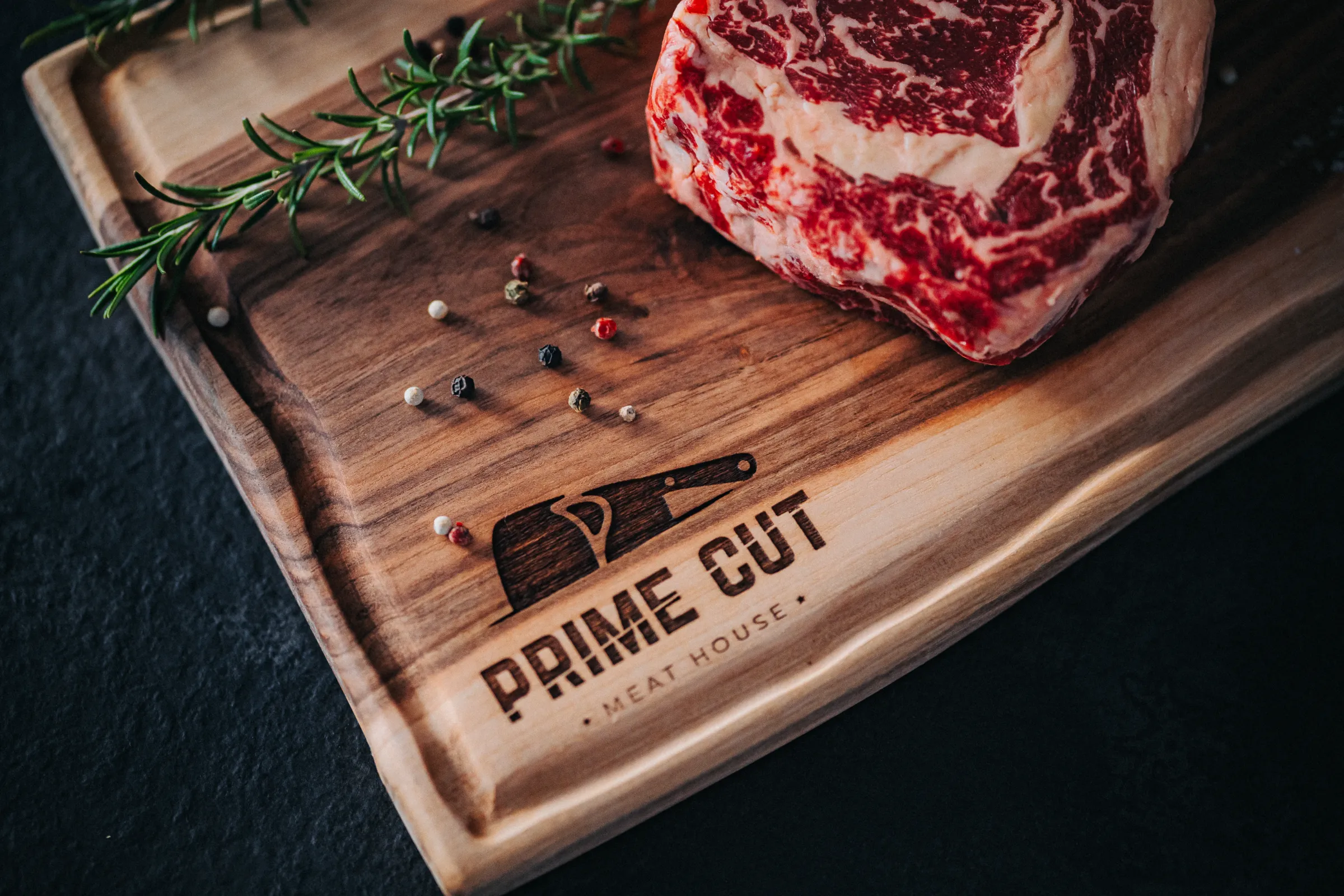
A perfect steak has a dark, crisp crust and an even pink centre from edge to edge. Three things get you there: a dry surface, the right heat and a thermometer.
Preparation
- Take the steak out of the vacuum pack and pat it dry with paper towel.
- Salt a day ahead (and leave uncovered in the fridge) or right before cooking. Salting 15–30 minutes ahead draws water to the surface and ruins the crust.
- The steak doesn't need to be at room temperature – 30 minutes out of the fridge is enough.
Internal temperatures
- Rare: 50 °C
- Medium-rare: 54–56 °C (recommended for dry aged)
- Medium: 58–60 °C
- Medium-well: 63–65 °C
Pull the meat 2–3 °C before the target because it keeps rising while resting.
Method 1: Pan (steaks up to 3 cm)
A cast-iron pan heated until smoking, a little high smoke-point oil. Flip the steak every 60 seconds – it cooks more evenly. In the last minute add butter, garlic and thyme and baste.
Method 2: Reverse sear (steaks 4 cm+)
For tomahawk, cowboy and T-bone: cook over indirect heat or in the oven at 110–120 °C to 48–50 °C in the centre, then 60–90 seconds per side over the highest heat. You get even colour with no grey band.
Resting and slicing
Let the steak rest 5–10 minutes. Slice against the grain into 1 cm strips, and only then add flaky salt.
FAQ
What temperature should steak be cooked to?
For medium-rare, 54–56 °C in the centre. Pull it at 52–53 °C because the temperature rises while resting.
When should I salt steak?
A day ahead or right before cooking – never 15–30 minutes before.