 Beef
 Pork
 Veal
 Lamb
 Poultry
 Grill, burgers & sausages
 Cured & smoked
 Boxes & gifts
 Seasoning & extras
Dry agedBestseller35 days
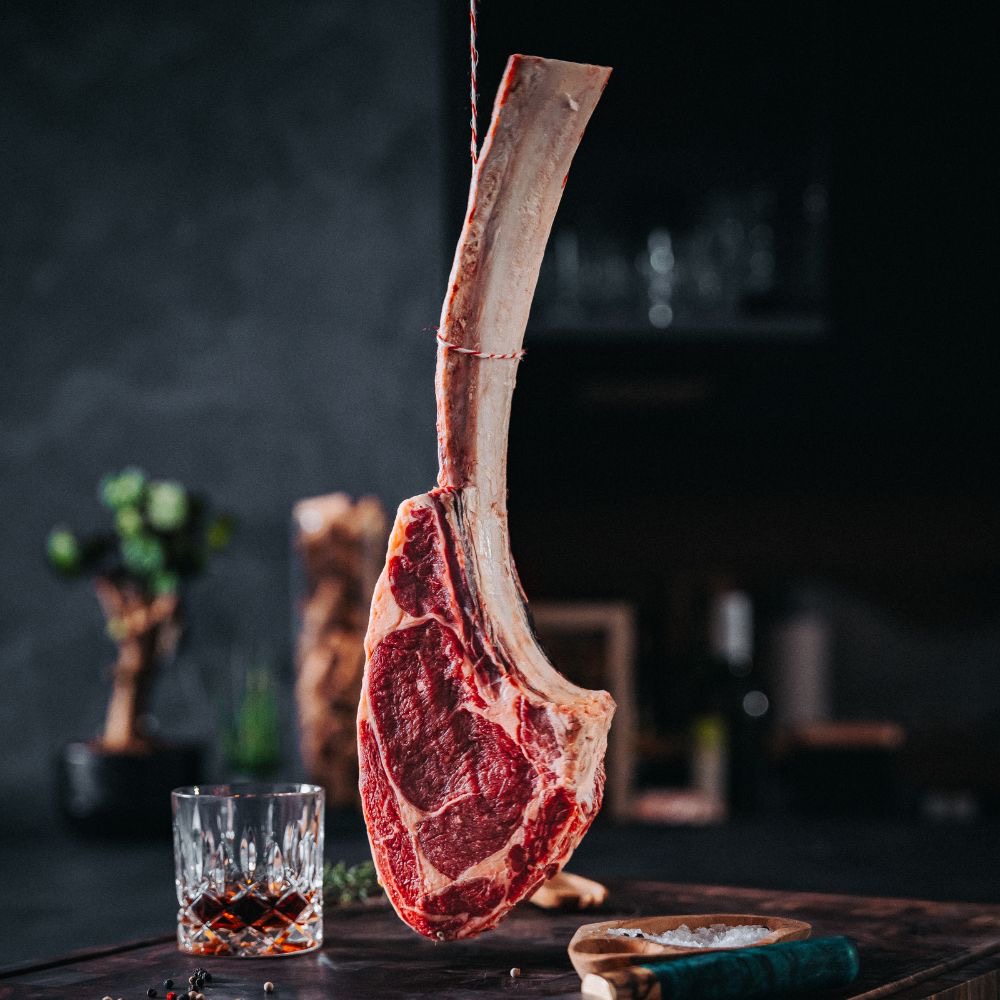
What happens in the aging chamber, how many days is ideal and why the flavour difference is so big.
We select carcasses with good marbling and a fat layer that protects the meat.
Natural enzymes break down connective tissue – the meat becomes tender.
Water evaporates, flavour concentrates, nutty notes appear.
Intense, almost cheese-like flavour – for connoisseurs.
Dry aging is a process where whole bone-in cuts of beef are kept uncovered in a chamber at 1 to 3 °C, with controlled humidity (around 75–85%) and constant air circulation. Over weeks, two things happen.
Natural enzymes in the muscle break down connective tissue and proteins. The result is a more tender texture – the difference is biggest in the first three to four weeks.
The meat loses water, so the flavour concentrates. After 30+ days you get notes of nuts, butter and aged cheese. A dark, hard crust forms on the surface and is trimmed away before sale.
Between water loss and trimmed crust, a 10 kg piece leaves 6.5 to 7 kg of saleable meat after 45 days. On top of that, the chamber and the meat are "busy" for weeks. That is why a kilo of dry aged ribeye costs more than fresh – you pay for time and loss, but get a flavour you cannot get any other way.
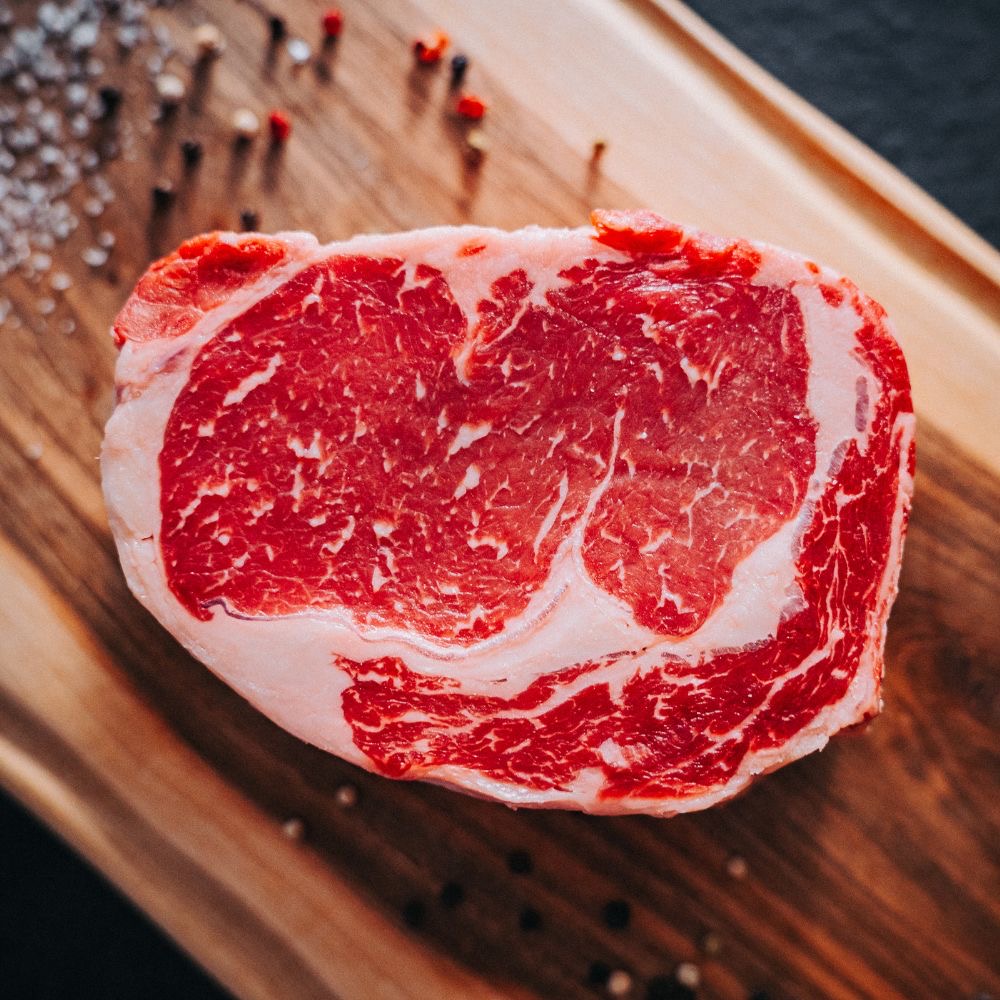
Boneless, easy to cook – the favourite that never disappoints.
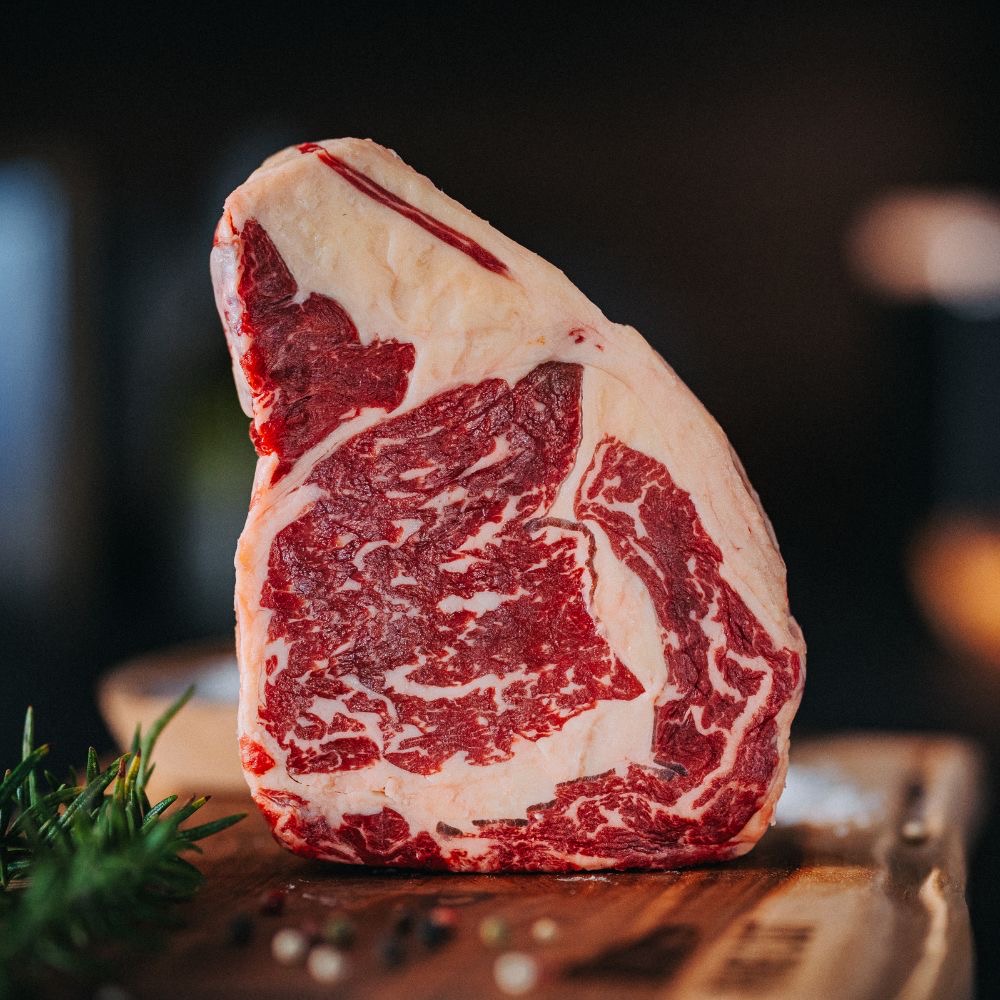
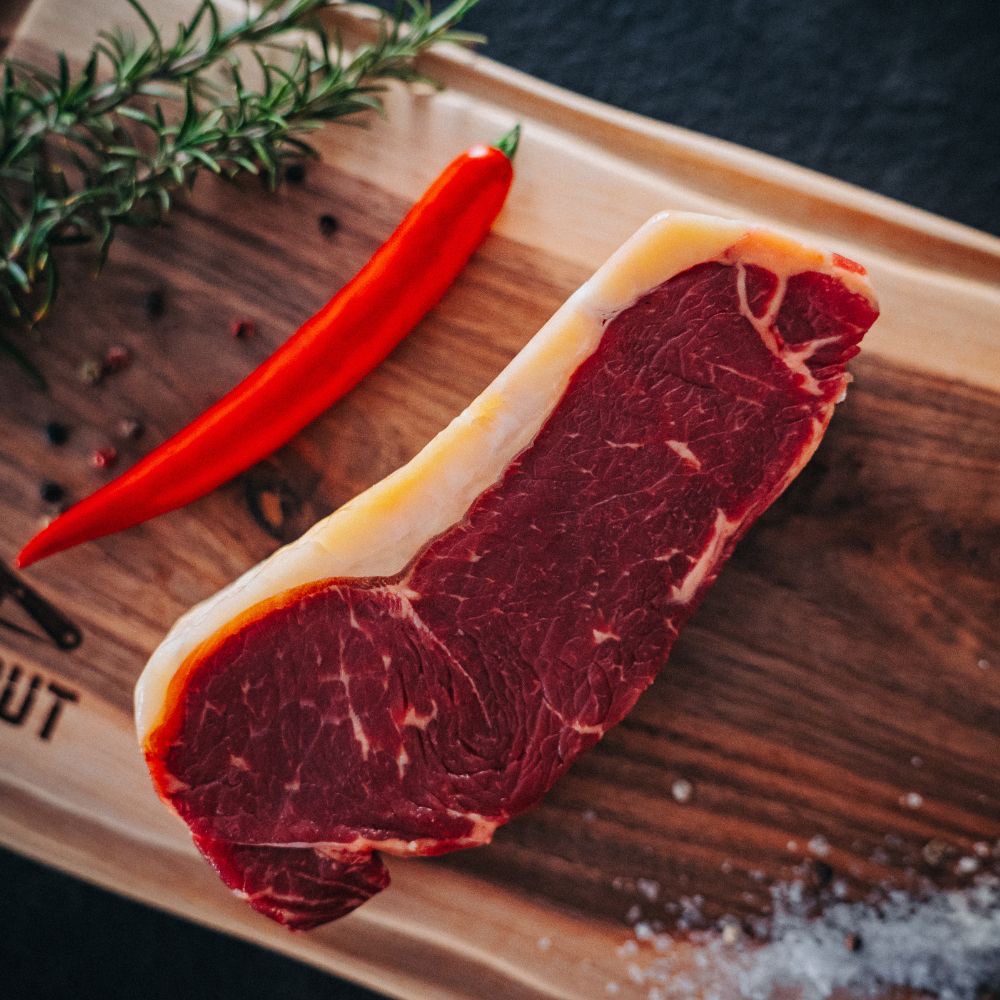
Our steaks age for 28 to 45 days, and the XO line up to 60 days.
During aging the meat loses 25–30% of its weight through evaporation and crust trimming, and the chamber is occupied for weeks.
A more intense beef flavour with notes of butter, nuts and, with longer aging, aged cheese.