 Steaks
 Beef
 Pork
 Veal
 Lamb
 Poultry
 Grill, burgers & sausages
 Cured & smoked
 Boxes & gifts
 Seasoning & extras
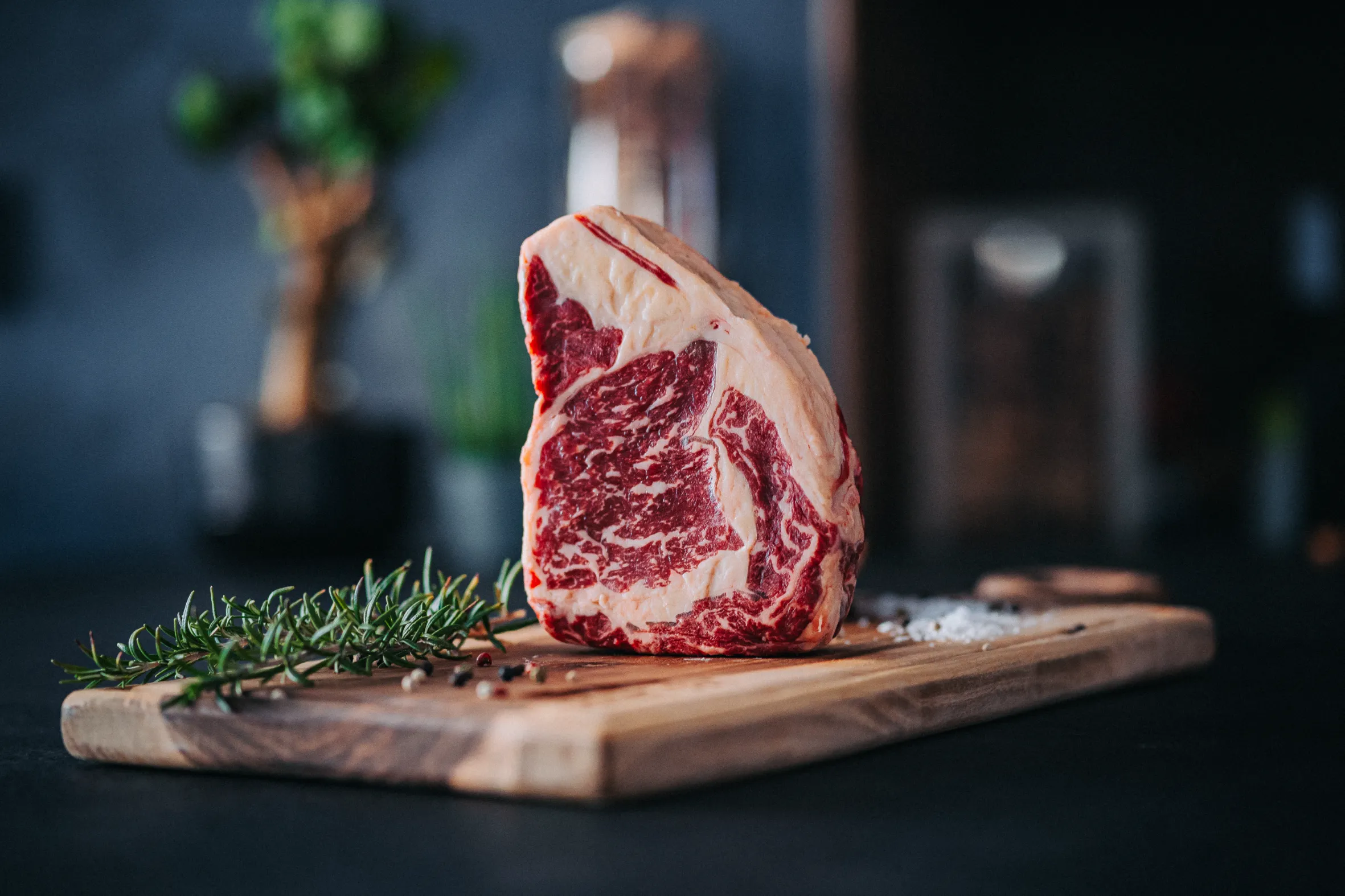
Dry aging is a process where whole bone-in cuts of beef are kept uncovered in a chamber at 1 to 3 °C, with controlled humidity (around 75–85%) and constant air circulation. Over weeks, two things happen.
1. Enzymes tenderise the meat
Natural enzymes in the muscle break down connective tissue and proteins. The result is a more tender texture – the difference is biggest in the first three to four weeks.
2. Water evaporates, flavour concentrates
The meat loses water, so the flavour concentrates. After 30+ days you get notes of nuts, butter and aged cheese. A dark, hard crust forms on the surface and is trimmed away before sale.
Why it costs more
Between water loss and trimmed crust, a 10 kg piece leaves 6.5 to 7 kg of saleable meat after 45 days. On top of that, the chamber and the meat are "busy" for weeks. That is why a kilo of dry aged ribeye costs more than fresh – you pay for time and loss, but get a flavour you cannot get any other way.
Dry aged vs. wet aged
Wet aging means aging in a vacuum bag. The meat tenderises but does not lose water, so the flavour stays "fresh" and slightly metallic. Most supermarket steaks are aged this way.
How many days is ideal?
- 21–28 days: more tender, mildly nutty – ideal for your first dry aged steak
- 30–45 days: pronounced flavour, the best balance
- 60+ days (our XO line): intense, almost cheese-like – for connoisseurs
FAQ
Is dry aged beef safe to eat?
Yes. It ages in controlled conditions and the outer crust is trimmed before sale. We also run HACCP and regular lab analyses.
Can I freeze dry aged steak?
Yes, vacuum sealed for up to 3 months. Thaw slowly in the fridge for 24 hours.